Tag: Insurtech AI

Data Over Intuition: How to Enter Provider Rate Negotiations with an AI Advantage

Data Over Intuition: How to Enter Provider Rate Negotiations With an AI Advantage

Key Takeaways

  • Eliminating the Preparation Gap: Traditional, manual spreadsheet tracking forces health insurance contract managers into a massive data disadvantage. Modernising your strategy with AI provider rate negotiations easily solves this problem to instantly plug costly profit leaks.
  • AI-Powered Tariff Benchmarking: By leveraging automation and context-aware AI models, carriers can instantly centralize messy, unstructured historical data (e.g., PDFs, CSVs, scans) into a single, queryable benchmark library.
  • Data-Driven Negotiation Clarity: Real-time access to dynamic market statistics — including mean, median, and P25 to P90 percentiles — empowers contract managers to instantly flag overpriced line items and slash renewal preparation from weeks to minutes.

See how it works: Book a customized demo of CoverGo’s Tariff Negotiation Tool.

When a health insurance contract manager steps into AI provider rate negotiations, they gain the ultimate strategic advantage. The platform turns a historically blind process into a transparent, data-driven discussion where both sides finally speak the same language.

Most carriers, however, don’t have that same clarity. Historical tariff data sits across hundreds of individual cases, inconsistent in format and difficult to query. What a specific provider tier or geographic zone should be costing is a question that typically takes days to answer, if it even gets answered at all.

Contract managers are often skilled negotiators. The problem isn’t capability; it’s infrastructure. Without a centralised benchmark, preparation means hours of spreadsheet hunting. Managers piece together what they can and fill gaps with institutional memory. Ultimately, they walk in hoping their read on the market is accurate.

The result is predictable: inconsistent outcomes across negotiations, missed savings on high-volume service lines, and no systematic way to know whether a provider’s submitted rates are fair.

The shift happens when provider tariff data is consolidated into a single, queryable benchmark library. This includes data from uploaded CSVs, PDFs, images, or existing system records.

Once structured, contract managers can benchmark every service line — averaging what other providers charge for the same service across your rate data: mean, median, P25, P75, and P90. The system automatically flags items as Overpriced, High Risk, Within Range, or Underpriced, and the system calculates deviation percentages on the spot.

What previously required days of manual aggregation becomes an immediate snapshot. A contract manager can see, before they enter the room, exactly where a provider’s rates stand relative to the market — and which specific line items are worth challenging.

From Benchmark Data to Negotiation Clarity

CoverGo’s Tariff Negotiation Tool closes the preparation gap. It ingests provider tariffs automatically, maps every service line against the benchmark library, and surfaces clear rate positioning on each item — so contract managers arrive with data behind every point they raise.

Onboarding evaluations and contract renewals that used to take weeks now take days because the platform embeds negotiation preparation right into the workflow.

See how it works: Schedule your expert-led demo today.

TL;DR

Insurance carriers face massive profit leaks because manual tariff benchmarking across thousands of provider networks is mathematically impossible at scale. CoverGo’s AI-powered tool solves this by automating data extraction from any format and instantly scoring rates against market statistics (mean, median, P25-P90) — slashing contract renewal preparation from weeks to minutes.

How does the tool handle unstructured data like scanned medical provider tariffs or messy PDFs?

CoverGo uses advanced OCR and context-aware AI models to automatically extract, clean, and structure line-item data from virtually any format — including PDFs, CSVs, and image files — without requiring manual data entry.

Can we customize the benchmark statistics based on our specific regional networks?

Absolutely. The scoring system is fully dynamic, allowing you to instantly flag rate deviations based on real market statistics (mean, median, P25, P75, and P90) tailored to your specific geographic tiers and provider networks.

How long does it take to set up and train the AI on our existing tariff history?

CoverGo’s platform is built for rapid deployment. Because the AI is already trained on complex insurance and medical data structures, it can centralize your historical files and begin flagging rate anomalies in days, not months.

For more information or an expert-led demo, reach out to a team member.

Negotiate with Data, Not Intuition

Stop entering network contract renewals at a disadvantage. Use automated AI benchmarking to instantly flag overpriced provider tariffs.

Schedule Your Expert-Led Demo
The Invisible Profit Leak – Why Manual Tariff Benchmarking Is Costing Insurance Carriers Millions

Key Takeaways

  • Manual tariff benchmarking is mathematically impossible to do accurately at scale when managing thousands of provider networks.
  • Fragmented market data leads to direct financial losses, allowing overpriced line items to go undetected and costing insurance carriers millions.
  • CoverGo’s Tariff Negotiation Tool automates data extraction, centralizing benchmarks from various formats (CSV, PDF, images) and system data, without manual data entry.
  • AI-powered scoring flags rate deviations instantly, automatically comparing service lines against real market statistics (mean, median, P25–P90).
  • Provider onboarding and contract renewal cycles are drastically cut down from weeks to minutes by leveraging a centralized benchmark history.

Want to see how it works? Book a customized demo of CoverGo’s Tariff Negotiation Tool.

Insurance carriers are scaling their provider networks at a rapid pace. But while their networks grow, the tools used to audit and benchmark those networks haven’t kept up. For many operations teams, the process looks exactly the same as it did fifteen years ago: open a spreadsheet, compare rates manually, repeat across thousands of files.

When you manage over 2,000 providers, manual benchmarking — averaging what other providers charge for the same service across your rate data — isn’t just slow — it’s mathematically impossible to do accurately. Each time a new provider submits a tariff schedule, your network team must compare it against existing rates across similar providers, tiers, and geographic zones.

The result? There is no single source of truth. Benchmarks live in scattered files and system data across shared drives and inboxes. Analysts spend days — sometimes entire weeks — aggregating data just to answer one basic question: Is this rate reasonable? In fact, macro data tracking from the EIOPA Report on Inflation and Insurance highlights that persistent claims inflation and rising operational expenses are severely compressing non-life underwriting margins. This pressure is forcing European carriers to aggressively eliminate back-office processing leaks, as manual, spreadsheet-dependent workflows simply cannot scale to manage network volatility.

That bottleneck has a direct financial cost. When market data is fragmented and hard to access, overpriced line items go undetected. A single service line priced 15% above market might seem manageable in isolation. Multiply that across thousands of providers and hundreds of service lines, and the cumulative impact runs into the millions.

The problem isn’t effort — your team is working hard. The problem is that the infrastructure forces them to make high-stakes financial decisions with incomplete, unstructured data and no clear benchmark to stand on.

Stop the Profit Leak

Don’t let overpriced service lines compromise your underwriting margins. See how CoverGo automatically flags rate deviations in real time. Request a Demo

CoverGo’s Tariff Negotiation Tool replaces scattered spreadsheet hunting with a centralised, AI-powered benchmark library. Every provider tariff — whether rates arrive as uploaded files (CSV, PDF, or image) or are already structured in your existing system — is automatically extracted and structured without any manual data entry.

Once uploaded, every service line is automatically scored against real market statistics: mean, median, P25, P75, and P90. Items are automatically flagged as Overpriced, High Risk, Within Range, or Underpriced, with deviation percentages calculated on the spot.

The operational impact is immediate: a provider onboarding cycle that previously stretched across weeks is reduced to days. And when contract renewal time comes, your team isn’t starting from scratch. The platform already holds the full history — so in minutes, you can see exactly how a provider’s rates have moved relative to the current market.

That’s not just an efficiency gain. It’s a fundamental shift in how carriers protect their margins and stay ahead of rate creep across a growing network.

See how this works in practice; explore the Tariff Negotiation Tool to walk through the full workflow.

Ready to transition from weeks of manual work to minutes? Schedule your expert-led demo today.

TL;DR

Managing thousands of provider networks using manual spreadsheets is mathematically impossible to do accurately, resulting in fragmented data and multi-million dollar profit leaks from undetected overpriced service lines. CoverGo’s Tariff Negotiation Tool solves this by automating data extraction from PDFs, CSVs, images, and system data into a centralized library, using AI-powered scoring to instantly flag rate deviations and cut provider contract renewal cycles from weeks to minutes.

Why is manual tariff benchmarking failing insurance carriers?

With carriers managing thousands of provider networks, manually checking rates across scattered spreadsheets is mathematically impossible to do accurately. It creates a major operational bottleneck and leaves teams without a single source of truth.

What is the financial impact of this manual process?

Fragmented and hard-to-access market data allows overpriced service lines to slide through undetected. Even minor rate deviations compound across large networks, resulting in direct profit leaks worth millions of dollars.

How does CoverGo’s Tariff Negotiation Tool solve this?

It automates data extraction from various formats (PDFs, CSVs, images) and system data into a centralized library. AI-powered scoring instantly benchmarks service lines against real market statistics (mean, median, P25–P90), cutting provider onboarding and contract renewal cycles from weeks to minutes.

For more information or an expert-led demo, reach out to a team member.

Stop the Profit Leak Today

Transition from weeks of manual spreadsheet work to minutes of automated, data-backed negotiation.

Schedule Your Expert-Led Demo

From Manual Claims to Intelligent Automation: How Generali Hong Kong Streamlined Claims Processing

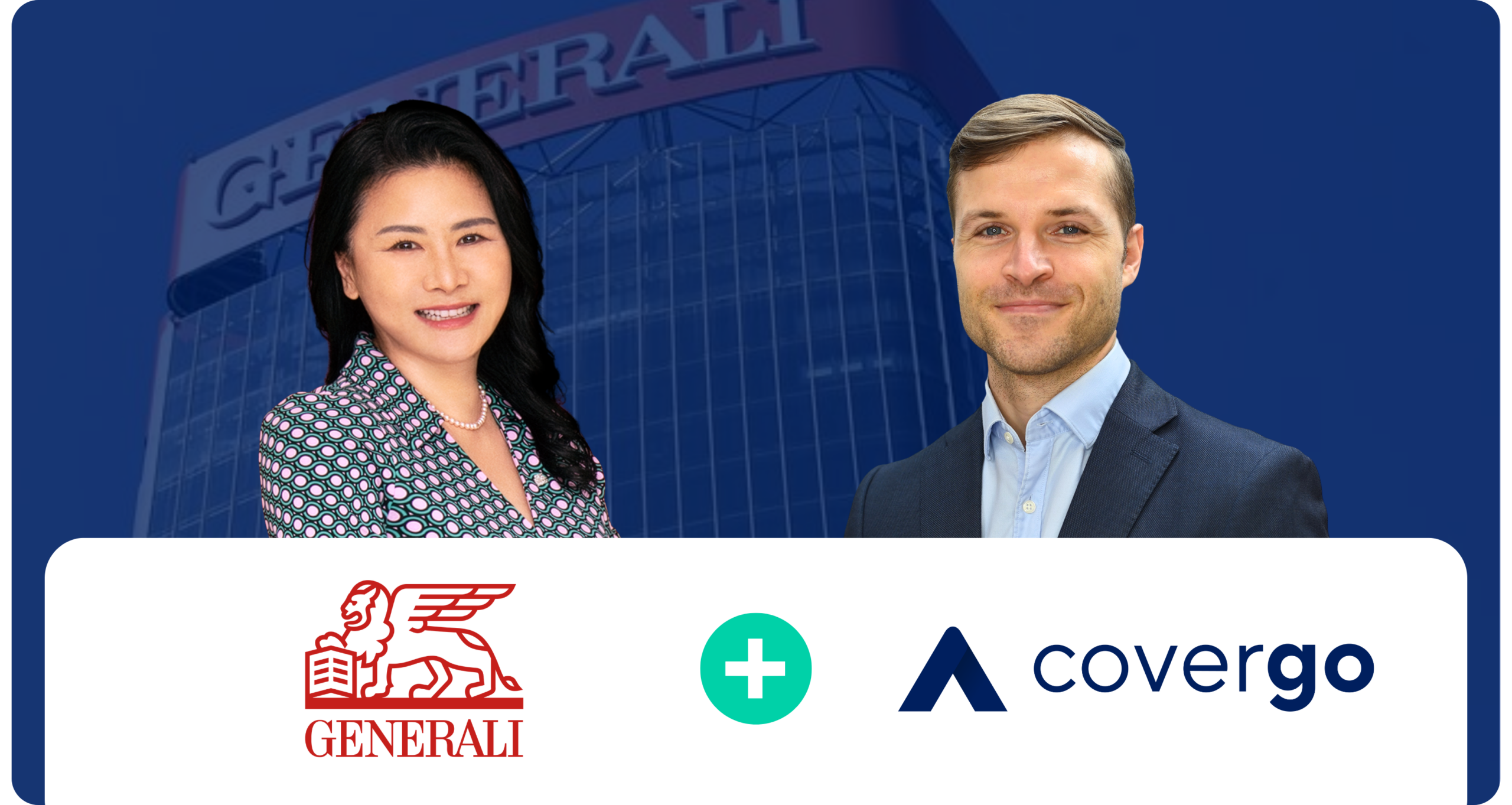
Cecilia Chang, CEO of Generali Hong Kong, Tomas Holub, CEO & Founder of CoverGo announce AI claims automation

Key Takeaways

The AI-powered solution can process unstructured documents in real time, extracting key information and converting it into structured, decision-ready data. It also identifies and maps important medical information, including ICD and benefit codes, while integrating directly into existing claims workflows.

With faster document processing and more accurate data extraction, claims teams can handle cases more efficiently while focusing more on higher-value tasks. Customers also benefit from smoother and faster claims experiences, helping strengthen satisfaction and trust.

At the same time, the scalable nature of intelligent automation enables Generali Hong Kong to support future growth without proportionally increasing operational workload.

A Shift Toward Intelligent Claims Processing

As insurers continue modernizing legacy processes, intelligent automation is playing a growing role in improving claims operations.

Generali Hong Kong’s adoption of AI-powered document processing highlights how insurers can move beyond manual workflows to create more agile, efficient, and customer-centric claims experiences for the future.

TL;DR

Generali Hong Kong partnered with CoverGo to modernize its health insurance operations by implementing an AI-powered Intelligent Document Processing (IDP) AI Agent. By automating the extraction and mapping of unstructured data from medical reports, claim forms, and invoices in real time, the solution eliminated manual data entry bottlenecks. This digital transformation successfully reduced processing times, minimized human error, and created a faster, more scalable, and seamless claims experience for customers.

FAQs

What is Intelligent Document Processing (IDP)?

Intelligent Document Processing (IDP) uses AI to automatically extract, classify, and process information from unstructured documents such as claim forms, medical reports, invoices, and receipts.

Why is AI important in insurance claims processing?

AI helps insurers reduce manual workloads, improve accuracy, accelerate claims turnaround times, and deliver a smoother customer experience.

What are the benefits of automated claims processing?

Automated claims processing can help insurers improve operational efficiency, minimize human error, scale more effectively, and provide faster, more seamless claims experiences for customers.

For more information or an expert-led demo, reach out to a team member.

How Intelligent Document Processing is transforming claims processing in insurance

How Intelligent Document Processing is transforming claims processing in insurance

Key Takeaways

This early validation helps prevent delays caused by missing documents or incomplete forms. According to the National Association of Insurance Commissioners, improving claims processing efficiency is a key priority for insurers as they seek to provide faster service and better policyholder experiences.

By automating document verification at the start of the claims process, insurers can reduce back-and-forth communication and accelerate the overall workflow.

Improving Accuracy and Reducing Human Error

Manual data entry can introduce errors that lead to processing delays or incorrect claim assessments. AI-driven document analysis helps mitigate this risk by extracting information consistently and validating data automatically.

For example, AI can identify key data points from documents such as medical diagnoses, treatment details, or repair estimates. It can also cross-check this information against policy rules or claims requirements.

Enabling Claims Teams to Focus on High-Value Work

While automation plays an important role in modern claims processing, human expertise remains essential for evaluating complex cases and making final decisions.

AI allows claims teams to adopt a human-in-the-loop approach. Routine tasks such as document extraction and validation are automated, while claims professionals review exceptions and make informed decisions when necessary.

This combination of AI speed and human oversight helps insurers handle higher claim volumes while maintaining strong governance and compliance.

TL;DR

Intelligent Document Processing (IDP) is revolutionizing insurance claims by automating the extraction and validation of data from unstructured documents like medical reports and invoices. By integrating AI-driven workflows, insurers can reduce manual errors, cut processing times by up to 80%, and allow claims experts to focus on high-value decision-making rather than administrative data entry.

FAQs

What is the difference between OCR and IDP in claims processing?

Traditional OCR (Optical Character Recognition) simply converts images of text into machine-readable characters. Intelligent Document Processing (IDP) goes further by using AI to understand the context, categorize document types, and extract specific data points (like ICD-10 codes or invoice totals) with high accuracy.

Can IDP handle handwritten claim forms or blurry uploads?

Yes. Modern AI models are trained on vast datasets of varied handwriting styles and low-resolution scans. IDP systems can often extract data from “noisy” documents that would typically require manual intervention.

Does AI replace the need for claims adjusters?

Not at all. AI is designed to handle the “grunt work” of data intake and verification. This enables a human-in-the-loop model where adjusters spend their time on complex investigations and customer empathy rather than typing data into a system.

How does IDP improve the customer experience?

The most common friction point in insurance is the “waiting game.” Intelligent Document Processing allows for instant document verification at the point of submission. If a document is blurry or a signature is missing, the customer can be notified immediately instead of waiting days for a manual review.

For more information or an expert-led demo, reach out to a team member.

Building Trustworthy Insurance AI: Why Context and Retrieval Matter

Building Trustworthy Insurance AI: Why Context and Retrieval Matter

Key Takeaways

  • Context is King for Accuracy: In insurance, fluency in natural language isn’t enough; AI must be grounded in real-world, up-to-date documentation to prevent hallucinations and ensure compliance.
  • RAG Outperforms CAG at Scale: While Cache-Augmented Generation (CAG) works for small, static datasets, Retrieval-Augmented Generation (RAG) is superior for insurance because it handles growing document sets with 80-90% better cost efficiency and significantly lower latency.
  • Precision Engineering is Required: Building a “production-grade” advisor requires more than just an LLM; it requires fine-tuning hyperparameters like chunking strategies and similarity thresholds to navigate dense legal boilerplate and nested tables.
  • Bridging Semantic Gaps: Effective insurance AI must understand intent rather than just keywords—for example, recognizing that a query about “key loss” relates to “vehicle accessories” clauses.

As artificial intelligence becomes increasingly embedded in insurance enterprise workflows, one reality has become unmistakably clear from our work with insurers at CoverGo: context matters.

It is no longer sufficient for an AI system to be fluent in natural language. To deliver real business value, AI must generate answers that are grounded in the real-world and up-to-date information. Especially in the insurance industry, where accuracy directly impacts compliance, claims outcomes, and customer trust. Unsupported or outdated responses are unacceptable.

The Insurance Knowledge Challenge

At CoverGo, we see this challenge every day. Insurers manage vast volumes of complex and continuously evolving documentation, including policy wordings, claims procedures, underwriting guidelines, FAQs, regulatory disclosures, etc. 

The challenge revolves around how to give the model a vast amount of information and context without the drawbacks. Supplying entire document sets comes with significant token costs, slower response times, and, counterintuitively, worse performance because of noisy or irrelevant information overwhelming the model.

This has led to a fundamental architectural question: How should large language models (LLMs) access insurance knowledge at scale?

Two primary approaches have emerged: Cache-Augmented Generation (CAG) and Retrieval-Augmented Generation (RAG).

Understanding the Architectures: CAG vs. RAG

Both RAG and CAG enhance LLMs with external knowledge, but they differ significantly in how that knowledge is accessed.

Retrieval-Augmented Generation (RAG)

RAG performs real-time retrieval (i.e., searches the contextual database) for every user query. Relevant document chunks are retrieved from the database and injected into the model’s prompt, ensuring responses are grounded in current and relevant source material.

Key characteristics of RAG:

  • Real-time retrieval at query time, fetching information as needed.
  • Naturally handles changing or growing document sets.

Cache-Augmented Generation (CAG)

CAG preloads knowledge—such as entire documents—into the model’s key-value (KV) cache ahead of time. The model then combines cached context with its pretrained knowledge to produce relevant answers without performing a retrieval step for each query. 

Key characteristics of CAG:

  • Pre-cached data that has been stored and used repeatedly.
  • Fast for repetitive queries.
  • Poor adaptability to frequently changing data.

Our Research: The Data-Driven Decision

Our internal research highlights why RAG architecture is better in the context of an insurance product expert chatbot. 

FeatureCAG RAG Why it matters for Insurance
Accuracy80–90% 90–95% Targeted retrieval reduces the “noise” that leads to hallucinations. 
Latency10–18s 4–6s Internal staff and customers expect near-instant responses. 
CostHigh Per-Query 80–90% SavingsEfficient token usage enables sustainable scale.
ScalabilityLimited (~60 docs) Effectively Unlimited Policies, riders, and addendums grow continuously.

Cache-Augmented Generation is a good option for fixed, smaller knowledge bases, which are to be called upon frequently. In this setup, cached content gets re-hit repeatedly — often without the cache expiring — which makes it efficient for stable, predictable datasets.

However, CAG does not scale well once the knowledge base grows. At 50+ Docs (250k+ tokens), the performance degrades rapidly in terms of latency, costs, and mistake rates. 

In document-heavy industries like insurance, where information is constantly evolving, this becomes a structural limitation. Cache-Augmented Generation models are constrained by context size and become expensive when caching large volumes of content.

RAG, on the other hand, is more scalable and configurable. With RAG we can control embedding strategy and chunking strategy. For RAG, the cost and latency are directly tied to what is actually retrieved — not the total size of the knowledge base.

For example, even with a 500k+ token corpus, we can retrieve only the top 20 relevant chunks capped at 1,000 tokens each. This keeps each response around 20k tokens — making cost predictable and latency consistently under ~5 seconds.

In short:

Retrieval-Augmented Generation is better suited for ever-changing, information-dense environments like insurance — which is why our AI agent is built on a carefully engineered RAG-architecture, optimized for precision retrieval, cost control, and scalable performance.

Beyond RAG: Finetuning Precision

Choosing to implement a RAG architecture is only the first step in building a production-grade insurance advisor. Real performance depends on precise engineering of the system’s hyperparameters — such as chunking strategies, similarity thresholds, and embedding dimensions. 

Insurance documents are uniquely challenging; they contain a high volume of “noise” in the form of legal boilerplate and dense, nested tables that can easily lead to hallucinations if not handled with precision.

Furthermore, insurance queries often require indirect semantic understanding. A user might ask about “key loss,” while the relevant coverage is buried under a clause for “vehicle accessories.” Tuning a system to bridge these linguistic gaps — without letting in irrelevant data — requires strong fine tuning.

At CoverGo, we’ve engineered our RAG pipeline to navigate this complexity, ensuring AI agents don’t just retrieve text but understand intent, context, and policy nuance. This approach underpins CoverGo AI Agents, enabling customer service and operations teams to receive accurate, explainable answers grounded directly in policy language – without manual document navigation. 

If you’re looking to deploy AI that delivers accurate, compliant outputs across real insurance workflows, CoverGo brings the architectural rigor and insurance domain expertise required to do it right.

Speak to us about how CoverGo can help your team with AI purpose-built for insurance.

Source:
Academic Reference (CAG Research Paper): Huynh, T. P., & Huang, H. H. (2024). CAG: Cache-Augmented Generation (arXiv:2412.15605). arXiv. https://arxiv.org/abs/2412.15605

Technical Reference (RAG Documentation): OpenAI. (n.d.). Retrieval – OpenAI API. OpenAI Platform. https://platform.openai.com/docs/guides/retrieval

TL:DR

For insurance providers, the choice between RAG and CAG isn’t just technical — it’s about accuracy and scale. While CAG works for small tasks, RAG is the industry standard for handling complex, evolving policy data with high precision and lower costs.

FAQs

What is the main advantage of RAG over CAG for insurance?

While CAG works for small, static datasets, RAG is the industry standard for insurance because it handles massive, evolving policy documentation with 80-90% better cost efficiency and significantly higher accuracy by retrieving only the most relevant context for each query.

Why is “precision engineering” necessary for insurance AI?

Insurance documents contain dense legal boilerplate and nested tables that can cause standard AI to hallucinate. Precision engineering — including fine-tuning chunking strategies and similarity thresholds — ensures the AI understands specific intent and policy nuances rather than just matching keywords.